
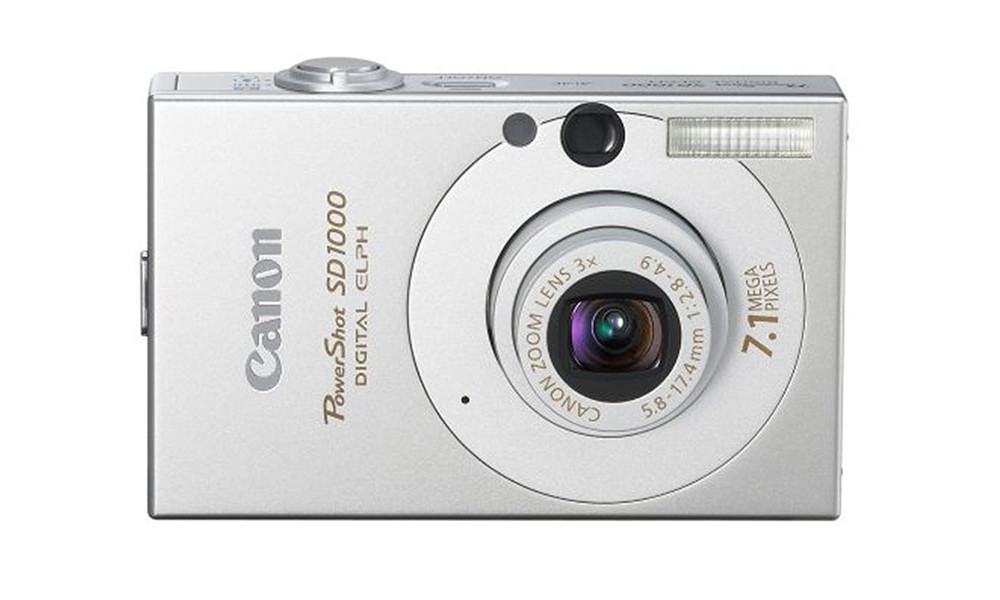

If you’re reading this, you’re most likely either looking for advice on what consumer-level “point and click” camera to buy or you recently purchased a Canon Powershot camera and perhaps wanted more info on it (or purchase validation!).
If you’ve ever wondered about professional photography prices, they are the way they are because the pros use cameras that are the complete opposite of this one.
The Canon SD Series
This article is about the SD series of point and click digital cameras produced by Canon that are meant for the average user. The main focus is my SD1000 but it has tips and is very relevant to anyone thinking of buying a compact Canon camera.
Two Problems Solved
In both of the cases stated above, I can tell you one thing that will make your life just a tad easier. You’ve made an excellent decision even considering this line of digital cameras. I own the PowerShot SD1000 which has resolved 2 major photography problems for me and at least one of these points probably affects you.
First, I personally own professional grade camera equipment which I’ve paid thousands for. I love taking photos for the fun of it but sometimes it’s just too much of a hassle to carry a large SLR camera, the big Canon L-series lenses, the extra baterries, and other accessories with me everywhere I go. (If you don’t know what an SLR camera is, don’t worry about it).
The second issue I face is that for years I was looking to buy a compact video recording cameras such as the JVC hard drive-based camcorder and the smaller Samsung SC-X210WL camcorder series. The JVC camera, while small was just not small enough. The Samsung camera was still too pricey for such as basic piece of equipment. So, I decided I didn’t need to take videos everywhere I went and let the idea go for a long time.
Enter the solution to my camera problems: The Canon PowerShot. I purchased an SD1000 over a year ago and still rave about it.
Features to Look For
If you’re looking to buy a camera from the latest Canon Powershot Digital Elph series, here are some features to look for:
Megapixels: Don’t listen to sales reps who try to convince you that you need the highest number of megapixels in your camera (whether or not you are looking to buy a Canon or any other brand of digital camera). Stores often price cameras based on that one feature alone, meaning that a 7 megapixel camera will cost more than one with 6 megapixels. As an average consumer, you need about 3 to 4 megapixels at most. If you decide to print photos, which fewer and fewer people actually do, you will probably print them as a 4×6 inch photo. Three megapixels is perfect for that. If you intend to print up to 8×10 which is rare for the typical consumer, get a camera that’s 4 megapixels. You don’t need a camera with 10 megapixels if photos alone are your main goal buying the camera. Also, keep in mind that the more megapixels you shoot in, the more space you use on your memory card. If you’re on vacation, that could be an issue. Finally, you most likely do not need an extended warranty so if that issue comes up, you can say “no.”
Video Capability: One reason to buy a camera with higher megapixels is video quality. Thankfully, it seems that all new models have a fairly high megapixel count so you don’t have to worry.
Model Numbers: Note that Canon does not stick to the sequence of model numbers. They have release many versions with different numbers at varying times. Well-known models include: SD1000, SD1100, SD1200, SD780, SD870, SD850 , and SD750. Don’t let the number fool you. The SD870 could have been released after the SD1100. A bigger number is not necessarily a better camera.
Specialized Features: Depending on which camera you get, it will have an array of special features, including:
- Face detection technology
- Automatic red-eye correction within the camera
- You can adjust the photographic features of each shot such as lightness, contrast, and so on.
- Panorama capability. There’s not direct panorama button on the SD1000 like on some other cameras but does have a “stitch” function that pulls different photos together to turn it into panoramic shot.
- A self-timer makes it easy to set it, put it down, and run over to your friends so you can be in the picture with them.
- The battery charger is very small and charges in an hour. You might want an extra battery for longer outings, especially if you take videos. Videos drain the batteries faster (as do very high resolution photos – the more megapixels, the more battery power is needed).
General Pros
Here are some general pros to my SD1000:
- It has a very quick start up for a pocket sized camera.
- Large, clear LCD screen in the back.
- Colors look amazing for a compact camera.
- Decent zoom, although depending on the light, it gets a little too grainy when you zoom in a lot.
- The time between shots is low which is very good. During events, you don’t want to take a photo and then wait a long time to take another one.
Cons
My SD1000 (and probably some of the other models) has several downsides. Note that these are not even close to a reason not to get one but they have to be stated.
- Red eye issue: I’m use to large flashes (like the 580EX) which help to dramatically decrease red eye. Unfortunately, the SD1000 does produce many photos with red eye.
- Lack of Control: Most people probably won’t use this but as an experienced photography, I would have liked to be able to manually adjust the aperture and shutter speed.
- Features Hard to Find: Some features are a little harder to find when you’re looking in the digital menu.
Why Canon Leads the Digital Camera Market
There are many reasons why Canon is so dominant when it comes to consumer point and shoot cameras. Here are just a few:
Experience: Canon has been bulding small, pocket-sized digital cameras for many years (the first one came out in 1995). Generally speaking, with each model they release, they find the bugs and fix them in the next one. They then add new capabilities to the next camera, figure out any issues, correct them, and the cycle goes on and on.
Lens Quality: It’s amazing how Canon has managed to create a camera with a tiny lens that takes such unbelievably clear photos. It’s amusing to hold up the SD series camera, with its tiny lens, next to my Canon 24-105mm lens. I could almost fit the entire camera into the lens tube! In any case, the quality is there, no question.
Superior Video Capability: This is one feature that caught me by surprise. The quality of video on my SD1000 is unreal. The picture and sound are so incredible that I ditched my plans to buy the Samsung handheld video camera. This camera makes excellent MPEG videos which you can easily watch on your computer (or plug the camera into your TV and watch your home movies on TV with family and friends).
Hot Designs: The Canon SD series designs just look great! The world has fallen in love with Canon’s camera designs the same way they are enamored by the Motorola RAZR phone which is absolutely everywhere, from people walking by you on the street to TV and Movies. These cameras just look cool and sleek. They also come in many colours. The design almost compels you to want to pull it out and show it off.
Portability: I actually went out and bought a carrying case for this camera, only to discover that the camera itself fits incredibly well into the pockets of jeans and shorts. It’s like carrying an extra cell phone. You don’t even need a case to hold it. That way you can more easily take it out at summer parties, family gatherings, while on a cruise ship or a Bahamas vacation and other times where you may need quick access to a camera. Yes, the camera gets a little scratched up on the outside this way but it’s really not a big deal, at all.
Features: These cameras have a lot going for them so when people want to tinker with various features, it’s worth their while.
Ease of Use: Many small digital cameras are brainless to use. This series fits in with that mentality. A quick read in the manual and you’re ready to take photos.
Avril Lavigne: Just kidding! I love Avril but I really don’t know if her appearance in Canon’s advertising is really having an effect on sales. Perhaps it’s beneficial for brand recognition among a new target audience. At the least the guitar riff from her song “I Don’t Have to Try” that’s featured in the TV commercial rocks!
Mobile Phone Cameras
Many mobile phones come with increasingly better technology and gadgets such as 2 megapixel cameras. Some take pretty good videos as well. While the convergence of cell phones, mobile devices, photo cameras, video cameras, GPS systems and other devices is inevitable, for now, I personally enjoy keeping my mobile and point and click camera separate.
Final Points
I will end with a few short comments. First, no Canon didn’t pay me to write this article. Next, I do have some bones to pick with Canon but the value of their SD series cameras is not one of them. Third, these cameras really aren’t that expensive. At $200, give or take, they are well-worth it, especially when you combine photography and video capability.
Finally, since the camera is so portable, I often take photos and videos at times where I otherwise would not have. This is great for personal memories which is the ultimate goal of owning one of these.




Chintan B Patel
August 28, 2009 at 12:31 am
I want know more about Canon cameras, specifically accessory prices. Memory cards, battery charges, etc for a powershot 400. Any advice would be helpful.
Yours, Patel