
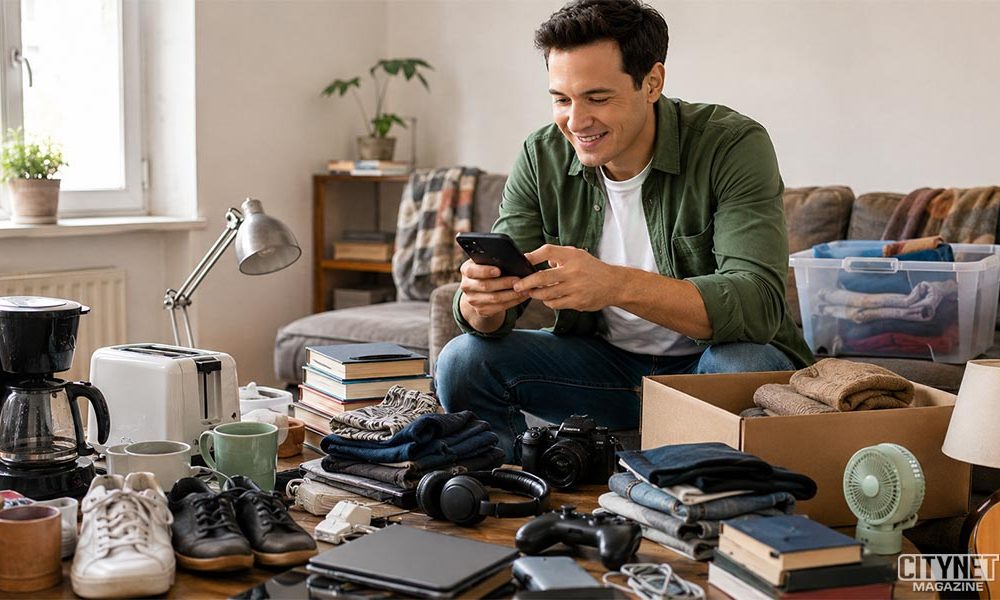

Times are tough and for now, there isn’t much hope in sight for countless people. The cost of groceries is getting painful cost more and a simple night out can feel like a financial decision. The powers that be in this country aren’t exactly working in our favour, and a lot of wallets are feeling it. So before you take on another side hustle, cut one more thing from your budget, or stare angrily at your bank app, it may be worth looking around your own home. There might be money sitting in your closets, drawers, garage, basement, storage bins, and old boxes. That’s real money, not theoretical money! The kind that someone may hand you through Facebook Marketplace, Kijiji, eBay, or a local buy-and-sell group.
I also wouldn’t be surprised if bartering becomes a more common activity in the coming years. I’ve used the Bunz app in the past for bartering and enjoyed it but unfortunately it has fallen on bad times and is set to close soon. It isn’t as good as it used to be but the point is people had a vision and perhaps its time hasn’t come yet. People are already trading services, swapping items, and finding ways around ridiculous prices. The consumerist mind control propaganda machine by big business has worked overtime for the past few decades. But now that a growing number of people can’t afford basic necessities like food or rent payments, somehow that materialistic con isn’t as pertinent. So, why not cash in on things you already own and don’t use? Let’s go over some options.
First, Start The Other Way: Save Your Money
So how can you make money from nothing? Well for one, obviously it’s best to limit what you’re buying when it comes to pointless junk. If you need rent money, now is not the time to waste what little you have on consumerism. I’m not going to lecture you, don’t worry. But what I will say is that when you’re running low on funds and want to save some money, it’s best to change your mindset. You don’t need that pretty ring at the local weekend market or the t-shirt with the meme on it. Save your $20 and think of how it can be better spent in these difficult times. Now, aside from savings, how can you make an extra few bucks to add to it? Well, your home likely already has money hiding in it.
Start With The Obvious Stuff
The easiest place to begin is with items that already have demand. Old phones, tablets, gaming systems, video games, small appliances, tools, musical instruments, exercise equipment, furniture, baby gear, brand-name clothing, books, collectibles, hobby gear, and kitchen gadgets can all be worth something.
Some of these items may feel useless to you because they’ve been sitting untouched for months or years. That doesn’t mean they’re useless to someone else. A chair you’re tired of might be perfect for a student. A guitar you haven’t played since 2017 might be exactly what someone wants for their kid. A box of old video games might be more valuable than you expect to players and collectors. The trick is to stop thinking one of two things. First, stop thinking in a self-centred way. Just because you don’t use something anymore doesn’t mean someone else isn’t in search of that item. Secondly, don’t tell yourself “I should/might use this again one day,” and instead start asking, “Would I rather have this item or the cash?”
Sell The Easy Items First
Don’t start with the emotional stuff. Don’t begin with family keepsakes, rare collectibles, or anything that requires a full afternoon of research. That bike you had as a kid still feels sentimental and it will slow you down as you decide to part ways with it. (Although I’d argue that more often than not, once it’s gone, it enters out-of-site out-of-mind territory).
Start with easy wins. Electronics are usually a good place to begin because people search for them. As someone who has been selling his stuff on and off since the days of Craigslist (and boy so I have stories), I can tell you that tech items like iPhones, laptops, iPads, and other tablets go very fast. So if you have old ones, you can make some quick money with them. Furniture can also move quickly, especially desks, shelves, chairs, small tables, and anything useful for apartments. Tools, small appliances, hobby equipment, brand-name clothes, and sports gear can also do well. You’re looking for items that are easy to take a photo of, then describe it, and also simple for someone to pick up. The more complicated the sale, the more likely you are to procrastinate. Things like sentimentality, novelty in re-discovering something you really like just before deciding to sell it, and complicated items will slow down the process.
Check What Similar Items Are Selling For
Before you list something, do a quick search. Look at Facebook Marketplace, Kijiji, eBay, and local groups to see what similar items are listed for. Pay attention to condition, age, brand, and whether people are actually pricing things realistically.
Insider pricing tip: Use eBay to filter for “sold” collectibles like comic books to see what the real going rate is. Anyone can put something up for sell and make up an absurdly high price but eBay will show what people are actually paying for that item. Some sellers are dreaming. You’ll see people asking nearly full price for something they bought eight years ago. Even thrift stores these days often have items for say, $4.99, that you can find at Dollarama for $1.25. Sometimes these items still have the Dollarama sicker on them! So ridiculous. In any case, a good rule is to look at several listings and price yours in a way that feels fair, simple, and likely to move. The goal here isn’t always to squeeze out every possible dollar. Sometimes the win is just getting $40 for something that’s been sitting in a closet and taking up space.
Photos
Next, take photos that don’t look suspicious. Good photos matter. You don’t need a professional setup but you should use natural light, clear the area around the item, and avoid taking pictures in a dark corner with laundry in the background. Show the item from a few angles. If there’s a brand name, size tag, model number, or useful detail, take a close-up. If there’s damage, show that too. People appreciate honesty, and it saves you from awkward messages later. Or worse, someone blowing a gasket and going all anger management on you when you try to sell it in person. A clean photo makes the item feel more valuable. A messy photo makes people wonder what they’re getting into.
Your Description
Write a simple, honest description. You don’t need to write a novel. Just include the important details. I find it extremely annoying when I have to message someone and ask them for more photos and item details that anyone who thought about the buyer side of things for maybe 3 seconds would have realized it needed. Mention the brand, size, condition, colour, model, what’s included, whether it works, and whether there are any flaws. Add the pickup area, the price, and whether the price is firm or negotiable.
For example:
“Small IKEA desk in good condition. Some minor marks on the top, shown in photos. Great for a student room or small apartment. Pickup near Plateau. $40.”
That’s enough. Clear beats clever. Price it to move, not to sit there and stress you out. That’s where people often get stuck. Stop thinking about the price you paid. That world is over now. It’s an unfortunate mentality of society that the consumerist-pushing billion dollar companies have pushed onto people, leading people to trust and pay more for a brand new item and then having that item be considered almost worthless when someone tries to sell it second hand. So stop thinking about what you paid and imagining what the item “should” be worth. And unless it’s an obviously insulting low ball, don’t get offended when someone offers less. A used item is worth what someone is willing to pay right now. If you can wait, have patience, and don’t need the money right away, you can get more for the item. Otherwise, it’s like a reverse convenience fee (where you pay a premium for convenience), in that you get less for the item when you need to sell it quickly (and so you lose money for the convenience of a quicker sale).
If your goal is extra cash and less clutter, price things to move. You can always start slightly higher and lower the price later, but don’t let a $25 difference keep an item sitting in your basement for another year. There’s also something satisfying about turning unused stuff into grocery money, gas money, debt payments, savings, or a little summer fun.
Bundle The Smaller Stuff
Some items aren’t worth selling one by one. Kids’ clothes, books, DVDs, kitchen items, décor, craft supplies, toys, and random household things can work better as bundles. Instead of listing one book for $4, sell a stack for $20. Instead of listing one baby outfit at a time, sell a bag by size. Instead of dealing with ten messages for ten tiny items, create one simple package. Bundles save time, reduce clutter faster, and make the buyer feel like they’re getting a deal. Sometimes I put up a few items like comic books and they don’t sell individually. I’ll wait a few months or even a year, then put them all into one box and offer it as a big discount package. Works every time. You have to be prepared to lose some of the value but you make the bigger sale and clear out more stuff. Not to mention that if no one who saw it for a year wanted it, it might be in low demand, no demand, or overpriced to begin with.
Use The Money For Something Specific
When you sell items here and there, the money can disappear into your regular spending. That’s fine, but it can feel more rewarding if you give the money a purpose. It might go toward groceries, pays your rent, or becomes your weekend fund. Maybe it goes into an emergency account, saving for a concert, dinner, or small trip you wouldn’t otherwise take. When the money has a purpose, the whole process feels more motivating.
Start With One Box
You don’t need to declutter your entire home this weekend. Start with one drawer, a single closet, storage bin, or box. Pick five things you don’t use. Look up what they’re worth, take decent photos, write simple descriptions, post them, and wait. You won’t sell anything if you don’t actually get things going. You may not get rich selling old stuff from around the house, but you might be surprised by how quickly small sales add up. More importantly, you’ll clear space, reduce clutter, and get a little control back in a time when a lot of people could use exactly that.





RSS