
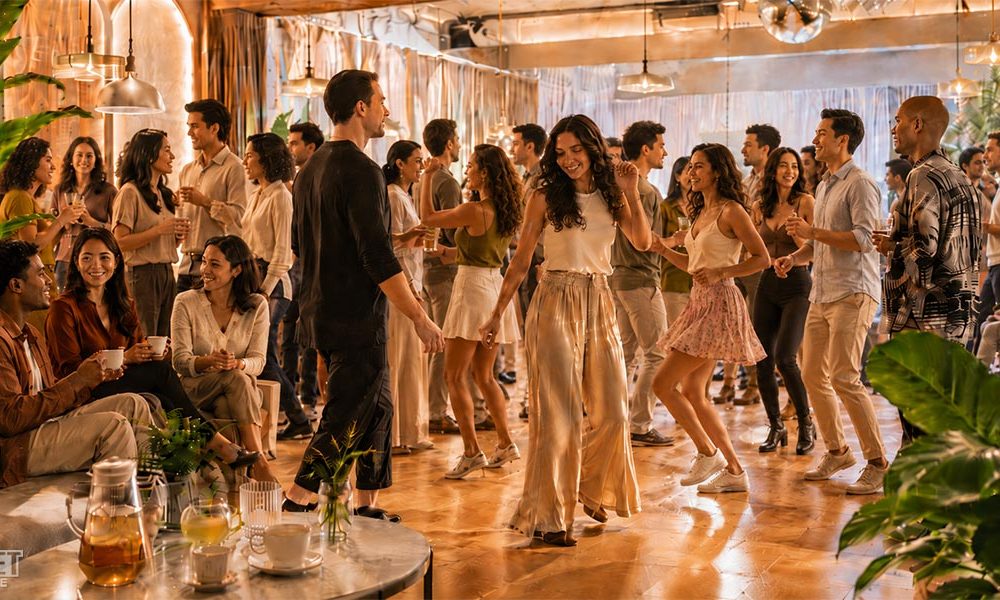

A while back, I wrote a series of articles about the changing face of nightlife and clubbing. I looked at everything from the decline of the traditional nightclub scene to the rise of day parties, mocktails, sober-curious events, and people wanting a social life that doesn’t destroy the next day. That’s where soft clubbing fits in.
For decades, clubbing brought to mind a very specific image: Strobe lights, pounding bass, crowded dance floors, expensive drinks, late nights, and stumbling home at some unreasonable hour. That version of nightlife still exists, of course. But a different kind of going out has been gaining traction. It still involves music, dancing, atmosphere, and social connection, but without the pressure to get wasted, stay out until 4 a.m., or pretend that exhaustion is part of the fun.
Welcome to soft clubbing.
(To be fair, I prefer the old way because to me exhaustion Is part of the fun sometimes. Although it’s more than that. It’s the crazy wild fun you had leading up to those moments that you’re less likely to get. But times are changing so here we are).
What is soft clubbing?
Soft clubbing is basically clubbing without the chaos. It blends the energy of nightlife with a calmer, more intentional vibe. The music, atmosphere, and dancing all still matter. But the experience is less about excess and more about enjoying yourself in a way that feels good during the event and after it.
Some people might call it mindful partying, sober-friendly nightlife, conscious clubbing, or intentional nightlife. Soft clubbing is the catchier label, and it captures the idea pretty well: Fun, social, music-driven, and a little gentler on the body and brain. It’s not necessarily anti-party but rather more like a reset.
What makes soft clubbing different?
Soft clubbing can look different from event to event, but it usually includes some of the following:
- Earlier start and end times: Instead of starting the night at midnight, events may begin in the afternoon or early evening and wrap up before people are completely destroyed.
- Alcohol-optional spaces: Some events are sober, while others simply make alcohol less central. Mocktails, tea, coffee, kombucha, sparkling drinks, and other alcohol-free options may be part of the experience.
- Better environments: Think softer lighting, more room to move, places to sit, and fewer situations where people are packed shoulder-to-shoulder with nowhere to breathe.
- Music that still matters: The soundtrack might include house, disco, funk, ambient, soul, global beats, downtempo, or other danceable music that doesn’t feel like an assault.
- More connection: The goal is not just to drink beside strangers. It’s to create an atmosphere where people can talk, dance, meet others, and actually enjoy the space.
What happens at a soft clubbing event?
A soft clubbing event might include a DJ set, dancing, curated lighting, alcohol-free drinks, and a crowd that is there for the music rather than just the bar. Some events may add wellness elements, such as yoga, breathwork, meditation, sound baths, tea ceremonies, or movement sessions before the music picks up. Others may simply feel like a regular party with better hours, better drinks, and less pressure. The point is not that every soft clubbing event has to be spiritual or serious. It can still be playful and feel like nightlife. It just doesn’t have to leave you feeling wrecked, and that’s the point.
Who is soft clubbing for?
Soft clubbing appeals to people who still like music, dancing, and socializing, but don’t necessarily want the old club experience.
That can include:
- People in their 30s and 40s who still want to go out, but don’t want to be punished for it the next morning
- Sober and sober-curious people who want social options that don’t revolve around drinking
- People who love dancing but hate overcrowded clubs
- Neurodivergent people or anyone who finds traditional nightlife too loud, packed, or overstimulating
- Wellness-minded people who still want a social life
- Students, workers, parents, freelancers, and anyone else who has things to do the next day
- People who are tired of “party until sunrise” culture but not ready to become boring
Let’s consider that last point for a second because soft clubbing isn’t about staying home forever. It’s about going out in a way that actually fits your life.
Is soft clubbing the same as a sober rave or ecstatic dance?
Not exactly, but they overlap. A sober rave is usually built around partying without alcohol or drugs. Ecstatic dance is often more spiritual or movement-focused, with its own culture and rules. Soft clubbing sits somewhere in the middle. It can be sober, but it doesn’t always have to be. It can include wellness elements, but it doesn’t have to feel like a retreat. It can happen in a club, studio, café, listening room, outdoor space, gallery, or any venue that can create the right atmosphere. That flexibility is part of the appeal.
Who coined the term soft clubbing?
The term has become more visible in nightlife and culture conversations over the last couple of years, especially as people started talking more about post-pandemic social habits, sober curiosity, listening bars, run clubs, coffee parties, and earlier events. Writer and creative strategist Yusuf Ntahilaja is strongly associated with naming and popularizing the term. In his 2025 piece, “2025: The Year of ‘Soft Clubbing,’” he described soft clubbing as the desire to experience a curated sonic atmosphere without being confined to a traditional club setting. Whether the phrase becomes permanent or not, it clearly describes something real: People still want music and connection, but many want it in a format that feels less exhausting.
Why Soft Clubbing Makes Sense Now
Soft clubbing taps into several cultural shifts happening at the same time. People are drinking less, or at least questioning how much drinking needs to be part of every social experience. Mental health and burnout are bigger conversations than they used to be. Many people are more protective of their sleep, energy, money, and time. There’s also the cost factor. Going out has become expensive. Cover, drinks, taxis/Ubers, late-night food, and the next-day recovery can make a “simple night out” feel like a bad investment. Soft clubbing offers another option. It says you can still go out and do your thing but still wake up feeling like a functioning human being. That means a lot to increasingly more people it seems.
The Rise Of Conscious Nightlife
Soft clubbing is part of a broader shift toward more conscious nightlife. That includes day parties, sober raves, ecstatic dance, listening bars, alcohol-free events, coffee parties, and music experiences in non-traditional spaces. In some cities, DJs are playing in cafés, bakeries, gyms, art spaces, parks, and community venues instead of only clubs and bars. This doesn’t mean that nightclubs are dead. People have been declaring the death of nightlife for years, and nightlife always finds a way to mutate.
Is soft clubbing just a trend?
Maybe the name is a trend. The behaviour behind it probably isn’t. People still want joy, music, movement, flirting, community, style, and the feeling that something is happening. They just don’t always want the hangover, the chaos, the pressure, or the 4 a.m. ending. Soft clubbing gives people permission to enjoy nightlife on different terms.






RSS